Every growing marketing team hits this question eventually: build in-house, or bring in a video production company when a project calls for it?
In-House Video Team vs Hiring a Production Company: Quick Answer
An in-house video team is a fixed cost: you pay salaries, benefits, equipment, software, and management overhead whether the team produces one video or twenty. Hiring a production company is usually a variable cost: you pay for specific projects, campaigns, or retainers when you need outside production support.
The basic decision comes down to volume and complexity:
- Build in-house if you need frequent, low-complexity video content every week.
- Hire a production company if you need higher-end creative work: polished customer-facing pieces, campaigns, commercials, or complex shoots.
- Use a hybrid model if you need both daily content and occasional high-production-value projects.
Most companies past a certain size end up doing some version of the third option, whether they planned it that way or backed into it.
When Does the In-House vs Outsource Decision Come Up?
This question rarely gets asked in the abstract. It shows up when the company needs more video than it's currently producing: marketing wants to move faster, leadership is comparing the cost of a new hire against a vendor budget, or the one person who's been handling video (an in-house employee, a freelancer, or some mix of both) is stretched past capacity. It also shows up on the other end, when the content coming out of an existing setup isn't good enough anymore. A startup that's been getting by on smartphone social clips suddenly needs a commercial for a product launch, or a company that's relied on a rotating cast of freelancers needs something more consistent for an ad campaign. Either way, the trigger is usually a gap between what's being produced and what the business actually needs next.
A common version of this: a marketing team hires one videographer to "handle video," and for the first year it works fine, covering social clips, a few internal updates, the occasional customer interview. Then the company plans a product launch or a rebrand, and that same one person is suddenly expected to direct, light, shoot, edit, and deliver something broadcast-quality on a deadline that assumes a full crew. That's usually the moment the in-house-versus-outsource question stops being theoretical.
What an In-House Video Team Actually Costs
The sticker price of an in-house hire is only the start. A single videographer or editor typically costs $60,000 to $90,000 a year in salary. The U.S. Bureau of Labor Statistics puts the national median for film and video editors at just under $71,000, before benefits, payroll taxes, or a Bay Area premium get added on top. Most teams need more than one role to cover shooting, editing, and creative direction without bottlenecking on one person. On top of salary:
| Cost category | What it includes |
|---|---|
| Salaries and benefits | Base pay, health insurance, payroll taxes, PTO |
| Equipment | Cameras, lenses, lighting, audio gear (often $30,000–$50,000+ upfront) |
| Software and storage | Editing licenses, cloud or on-site storage, backup systems |
| Studio or office space | Dedicated filming area, if the work requires one |
| Recruiting and training | Hiring costs, onboarding, keeping skills current |
| Management overhead | A manager's time spent directing and reviewing the team's work |
| Downtime | Salary keeps running between projects, even in slow weeks |
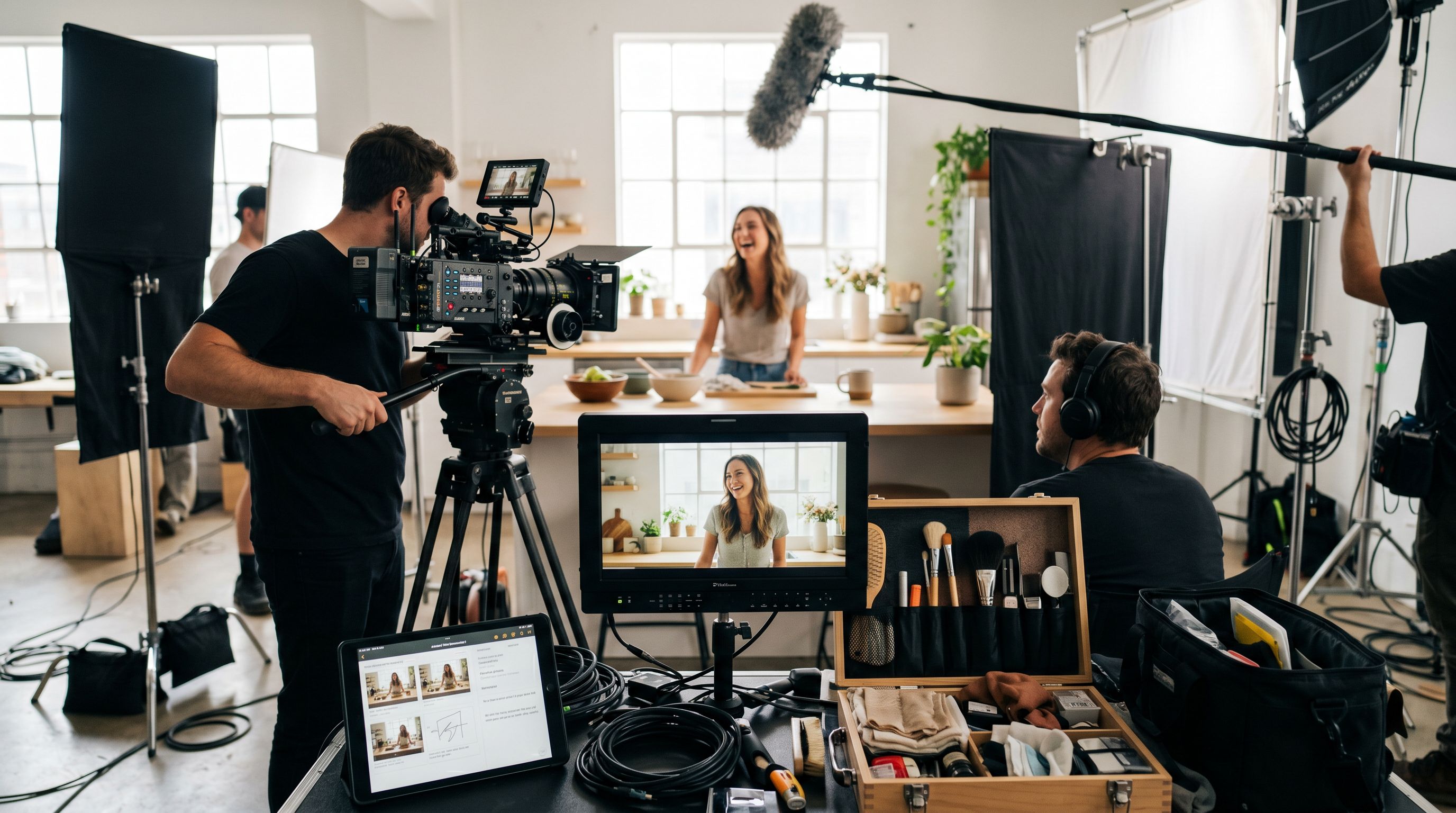
In San Francisco specifically, that math skews higher. Bay Area salaries for video hires run well above the national range, and studio or office space costs more per square foot than almost anywhere else in the country. A loaded in-house hire here often lands closer to $100,000+ once benefits and overhead are counted. None of this makes in-house a bad option. It just means the cost only pencils out when there's enough recurring work to keep the team busy. A single videographer producing two polished pieces a year is an expensive way to get two videos.
There's a risk the spreadsheet doesn't capture: turnover. An in-house team of one or two people concentrates all your institutional knowledge, your brand's visual style, your editing templates, your equipment quirks, in whoever happens to hold those jobs. If that person leaves, projects stall while you recruit and train a replacement, and the new hire starts from zero on all the brand-specific context the last person had built up over months or years.
What Hiring a Production Company Costs
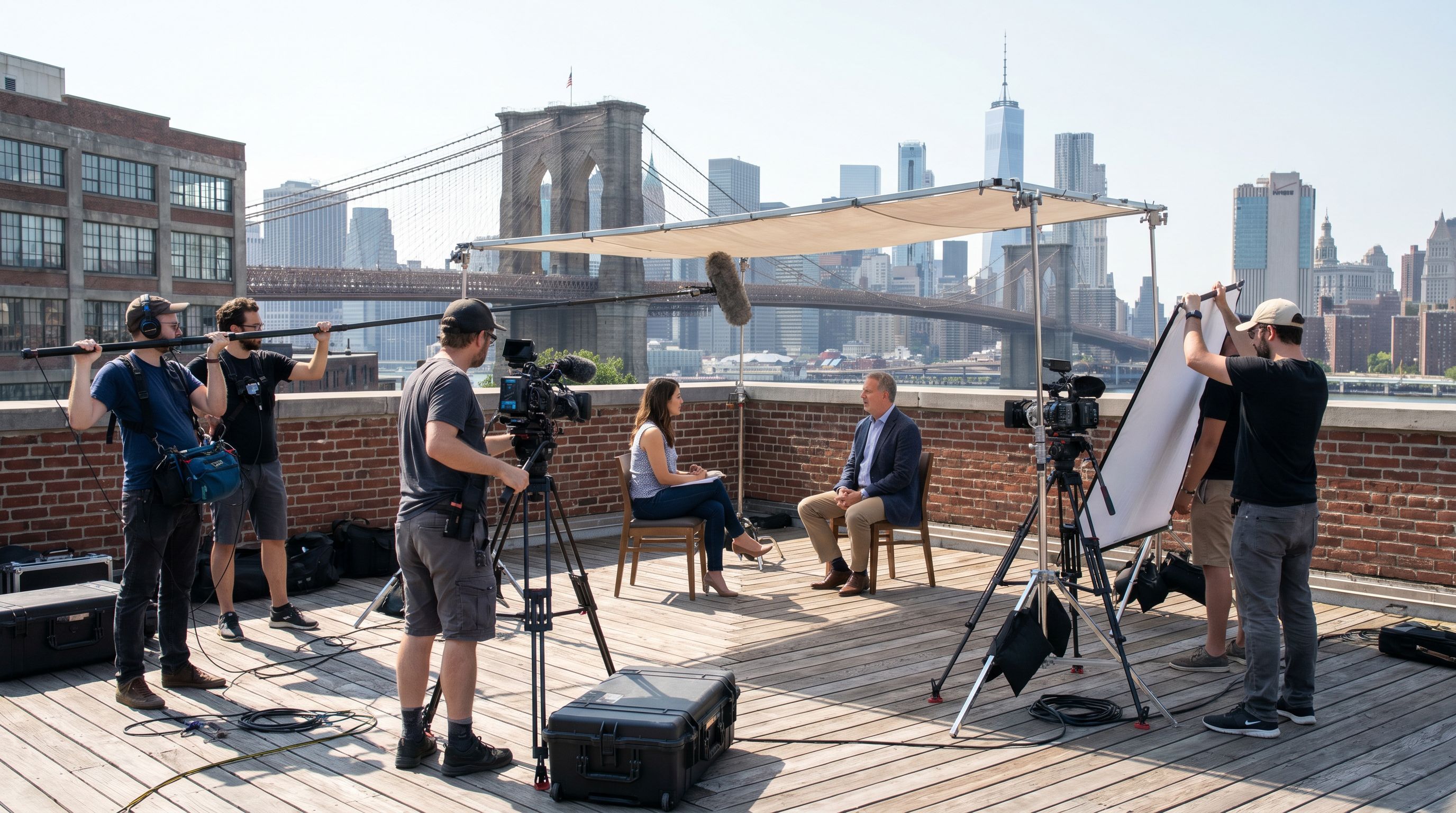
A production company's pricing works the opposite way: instead of one fixed number every month, you pay for the scope of what you need. Our own published pricing is a reasonable proxy for the market. A focused executive interview or single-day corporate edit runs $10,000–$15,000. A full brand film with a multi-day shoot runs $20,000–$50,000. A TV commercial or investor launch video runs $50,000–$100,000+. Most production companies, us included, also offer retainer arrangements for clients who need a steady stream of content but don't want to negotiate a new scope every time.
That price covers more than the shoot day. It includes the crew, the equipment, strategy and creative development, editing and post-production, and whatever specialized roles the project needs, from a colorist to a motion designer. Revisions and final deliverables are usually built into the quote rather than billed separately. Per project, this often costs more than the equivalent in-house version. Where it earns that cost back is efficiency: if your video needs are campaign-based, seasonal, or occasionally technically complex, paying for a full crew only when you need one usually comes out cheaper than keeping that crew on payroll year-round.
Quality: Where Each Option Wins
Neither option is categorically better. In-house tends to win on speed for simple things, brand familiarity, and the everyday content that doesn't need cinematic polish: internal updates, quick social clips, training videos, recurring interviews. The person doing it already knows the product, the leadership team, and the shorthand your company uses internally, and that familiarity shows up in how natural the content feels. A weekly product-update video shot by someone who sits three desks away from engineering will usually sound more credible than the same script filmed by an outside crew who read the release notes an hour before the shoot.
A production company tends to win when the finished piece has to carry more weight: commercials, brand films, product launches, customer stories, recruitment videos meant to represent the company at its best. These projects benefit from strategy, direction, lighting, sound design, and a post-production pass that a lean internal setup usually can't match, not because internal teams lack talent, but because one or two people rarely cover directing, cinematography, sound, and color grading at a professional level simultaneously. A launch commercial with a hired actor, a built set, and a full sound mix is a different production than the skill set most internal hires were brought in for, and pretending otherwise usually shows up in the finished video.
Speed, Scalability, and Bottlenecks
Speed depends entirely on what kind of speed you need. For quick, simple content, an in-house team wins because they're already inside the building: no onboarding, no briefing an outside partner on context they already have. A same-day turnaround on a social clip is realistic for an internal hire and almost never realistic for an outside production company, which needs time to schedule crew and plan a shoot properly. For complex work, a production company is often faster in practice, because they already have producers, directors, and specialists on standby instead of building that capability from scratch for a single project. A brand with no internal video infrastructure trying to produce its first commercial in-house will likely spend more time figuring out who does what than an established crew spends on the entire shoot.
The bottlenecks look different too. In-house setups tend to stall when one videographer is responsible for everything, when internal approvals take longer than the shoot itself, or when editing capacity simply runs out during a busy month. Production company engagements stall for different reasons: vendor scheduling, scope changes mid-project, or unclear creative direction at the start that forces a round of revisions later. Neither model is immune to delays. They just fail in different places. Knowing that in advance helps: don't commit to one option assuming the other's problems don't apply to you.
Creative Range and Specialization
An in-house team's biggest asset, deep brand knowledge, can also become its biggest limitation. When the same one or two people handle every video, the work tends to converge on a familiar style over time, simply because that's what the team knows how to execute well. There's nothing wrong with consistency, but it can start to look like repetition if every video uses the same three shot types and the same edit pace.
A production company brings a wider bench: directors, producers, cinematographers, sound mixers, editors, motion designers, colorists, often more specialists than a single company would ever hire full-time for video alone. That range shows up as outside perspective as much as technical skill. A team that's shot dozens of commercial and corporate projects across different industries has seen more approaches to a similar brief than an internal team working exclusively on one brand ever will.
The Hybrid Model: Internal Team + Production Partner
For most companies past the early stage, the realistic answer isn't in-house or outsourced. It's both, split by what each one is actually good at. Wyzowl's 2026 State of Video Marketing report found that 59% of businesses create video entirely in-house and 10% rely exclusively on outside vendors. Another 32% already run a mix of both, which lines up with how most companies we work with actually operate once they're past the very early stage.
Use an internal team, or a single generalist hire, for the content that needs to move fast and doesn't need a full crew: social clips, internal updates, simple interviews, training content, event recaps, basic editing. Bring in a production partner for the work where the stakes and production value are higher: commercials, brand campaigns, product launches, customer stories, a website's hero video, recruitment campaigns, investor or sales enablement videos, or any shoot complex enough to need multiple locations or stakeholders signed off before filming starts.
Think of a Production Partner as a Fractional Team, Not a Vendor
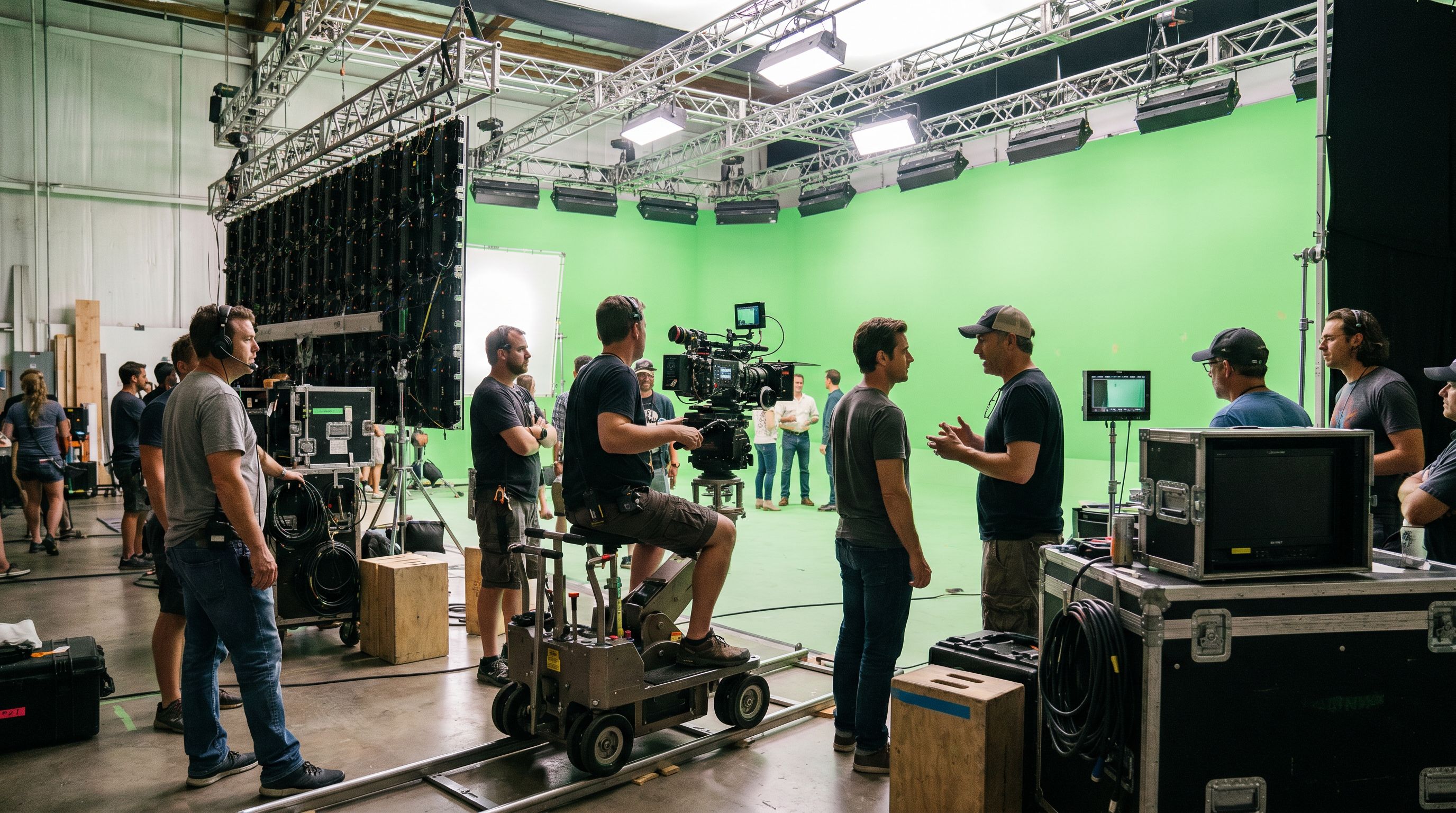
Most of this decision gets framed as a permanent choice: either you have a video team or you don't. That framing misses how the better-run setups actually operate, and it's the pattern we see most often with Bay Area startups and tech companies specifically: a lean marketing team handles day-to-day social and internal content in-house, then brings in an outside crew for the launch, the funding round, or the campaign where the production value has to match the company's ambitions. Companies that already treat finance, legal, or recruiting as fractional functions, brought in for specific needs rather than staffed full-time, tend to apply the same logic to production once someone points it out: keep a lean internal team for daily content, and activate an outside crew specifically for the projects where a mediocre result actually costs you something. A launch, a funding round, a rebrand, a national ad buy.
That only works if the partner behaves like an extension of your team instead of a vendor you re-brief from scratch every time. Our creative team, writers, director, and editor, sits under one roof rather than getting reassembled from freelancers project to project, so the person who understood your brand on the last shoot is usually the same person on the next one. That's part of why Domm Holland, former founder at Fast, described working with us on their TV commercial as feeling like having an in-house production team, without the year-round headcount that would take. First cuts go out within a week of wrap, and our crew covers multiple US markets without the travel markups that usually make "activate as needed" expensive in practice. The goal is that calling us in for the projects that matter feels closer to switching on a team you already have than starting a vendor relationship cold.
Decision Framework: When to Build, When to Hire
| Situation | Better fit |
|---|---|
| Weekly low-complexity content | In-house team |
| Occasional high-stakes campaign | Production company |
| Product launch or commercial | Production company |
| Internal training library | In-house team |
| Brand film or customer story | Production company |
| Ongoing social content plus quarterly campaigns | Hybrid model |
| Limited budget but frequent simple needs | In-house or freelancer |
| Complex shoot with crew, lighting, sound, and post-production | Production company |
If your situation splits across more than one row, that's usually a sign you're a hybrid case rather than a pure build-or-buy decision.
What to Look for in a Production Company
If the comparison points you toward hiring outside help, a few things separate a good production partner from a risky one. Ask to see portfolio examples relevant to your actual goal, not just polished reels; a company that's produced commercial work for consumer brands isn't automatically the right fit for a technical B2B explainer, or a corporate piece meant for investors. Look for a clear production process from discovery through delivery, transparent pricing instead of a number that grows once you sign, and a timeline that accounts for revisions rather than assuming the first cut will be the last one. Strong communication matters more than most buyers expect going in, since most of what goes wrong on a video project traces back to unclear expectations rather than technical failure. And ask directly about scale: can this team add crew or post-production capacity if the project grows, and do they understand where the finished video actually needs to live, whether that's broadcast, paid social, or your own website.
Get a quote
Not sure whether to build in-house or hire out?
There's no account manager standing between you and the answer. You'll walk through your scope, timeline, and goals directly with our founder, and most projects get a real line-item quote within 48 hours of that conversation.